
FRP Lining Waterproofing in Mumbai
FRP lining waterproofing bonds layers of glass-fibre reinforcement saturated with resin onto a prepared substrate, curing into a hard, seamless, chemically resistant shell. It is used where the lining must resist chemical attack and mechanical damage as well as water — tanks, bunds, channels and industrial containment.
When this is the right system — and when it is not
Waterproofing is a selection problem before it is an application problem. Most failures we are called to fix were the wrong system for the substrate, not a bad product.
When this is the right choice
- Chemical storage and containment
- Tanks and channels needing a rigid, abrasion-resistant liner
- Where a structural lining is wanted rather than a flexible coating
When it is not
- Substrates that move — FRP is rigid and will crack or debond
- Potable water unless the specific resin system is potable-certified
The system, layer by layer
Every layer has a job. The ones people cut to save money are usually the ones holding the rest together.
- L01Substrate preparation
Mechanically abraded, dry.
- L02Resin primer
Sealed and keyed.
- L03Glass fibre + resin laminate2.0-4.0 mm
Layered and consolidated to remove air.
- L04Topcoat
Chemical-resistant finish.
Almost every failure starts here
Preparation produces nothing visible, costs real money, and is the first thing removed from a cheap quotation. It is also what decides whether the system lasts.
The substrate is mechanically abraded to a sound, dry, open surface. Moisture content is measured against the resin manufacturer's limit. Cracks are cut and filled, sharp internal angles are filleted and external corners are radiused, since a rigid laminate cannot turn a sharp corner without stress-cracking at the angle.
How we apply frp lining waterproofing
Step by step, with the specifications each stage is held to.
- 01
Confirm the chemical exposure
Resin chemistry is selected against what will actually be stored, at what concentration and what temperature. Specifying FRP without that information produces a lining that fails in service, sometimes with consequences well beyond the lining.
- 02
Prepare mechanically and dry
Abraded to an open profile, moisture measured, cracks filled, angles filleted and corners radiused.
- 03
Apply resin primer
A resin primer seals and keys the substrate for the laminate.
- 04
Lay up the laminate
Glass fibre reinforcement is laid and saturated with resin, built up in layers to 2.0–4.0 mm depending on the duty.
- 05
Consolidate to remove air
Each layer is rolled out with a consolidating roller to drive out entrapped air. Air voids in a laminate are weak points that fail first under chemical or mechanical attack, and they are invisible once the topcoat is on.
- 06
Apply the topcoat
A chemical-resistant topcoat seals the laminate surface.
- 07
Spark test
The cured lining is spark-tested across its full area to locate pinholes and voids, which are then repaired and retested.
What goes into the system
- Resin
- Selected specifically for the chemical, its concentration and its service temperature — polyester, vinyl ester or epoxy as the duty requires.
- Reinforcement
- Glass fibre mat or cloth, laid in the number of plies the duty requires.
- Topcoat
- Chemical-resistant surface coat over the consolidated laminate.
What goes wrong, and what we check
These are the failure modes we are called in to fix on other people's work. The checkpoints on the right are how we avoid repeating them.
Common failure modes
- Air voids left in the laminate
- Applied over a damp or moving substrate
- Resin chemistry mismatched to the stored chemical
Our QC checkpoints
- Laminate thickness and void check
- Spark/holiday testing
- Resin compatibility documented
Systems often specified alongside this one
- Polyurea Waterproofing
Polyurea is a spray-applied, fast-setting elastomeric coating that gels within seconds and forms a seamless, high-elongation, highly abrasion-resistant membrane.
- Swimming Pool Waterproofing
Swimming pool waterproofing lines the pool shell so treated water cannot escape into the structure and so chemically treated water cannot attack the concrete.
- Chemical Coating
Chemical coating is the application of a liquid chemical-based protective barrier to concrete or masonry, forming a continuous film that resists water penetration and chemical attack.
- Brick Bat Coba Waterproofing
Brick bat coba is the traditional Indian terrace system: broken brick pieces bedded in waterproofed cement mortar, laid to a fall and finished with china mosaic or IPS.
- China Mosaic Waterproofing
China mosaic is a finish of broken glazed ceramic tile pieces set in waterproofed cement mortar over a terrace.
- Base Coat Waterproofing
Base coat waterproofing is the bonded preparatory layer applied directly to the structural substrate before the main waterproofing system.
FRP Lining Waterproofing across Mumbai
The right specification changes with the locality — coastal chloride exposure, water table, and the age of the building stock all move the answer.
- FRP Lining Waterproofing in Marine Lines
Ward C · 55 min from our office
- FRP Lining Waterproofing in Girgaon
Ward C · 55 min from our office
- FRP Lining Waterproofing in Prabhadevi
Ward G/South · 45 min from our office
- FRP Lining Waterproofing in Byculla
Ward E · 50 min from our office
- FRP Lining Waterproofing in Khar
Ward H/West · 22 min from our office
- FRP Lining Waterproofing in Santacruz
Ward H/West & H/East · 18 min from our office
- FRP Lining Waterproofing in Andheri East
Ward K/East · 15 min from our office
- FRP Lining Waterproofing in Jogeshwari
Ward K/West & K/East · 0 min from our office
- FRP Lining Waterproofing in Kandivali
Ward R/South · 25 min from our office
- FRP Lining Waterproofing in Dahisar
Ward R/North · 35 min from our office
- FRP Lining Waterproofing in Juhu
Ward K/West · 15 min from our office
- FRP Lining Waterproofing in Powai
Ward S · 30 min from our office
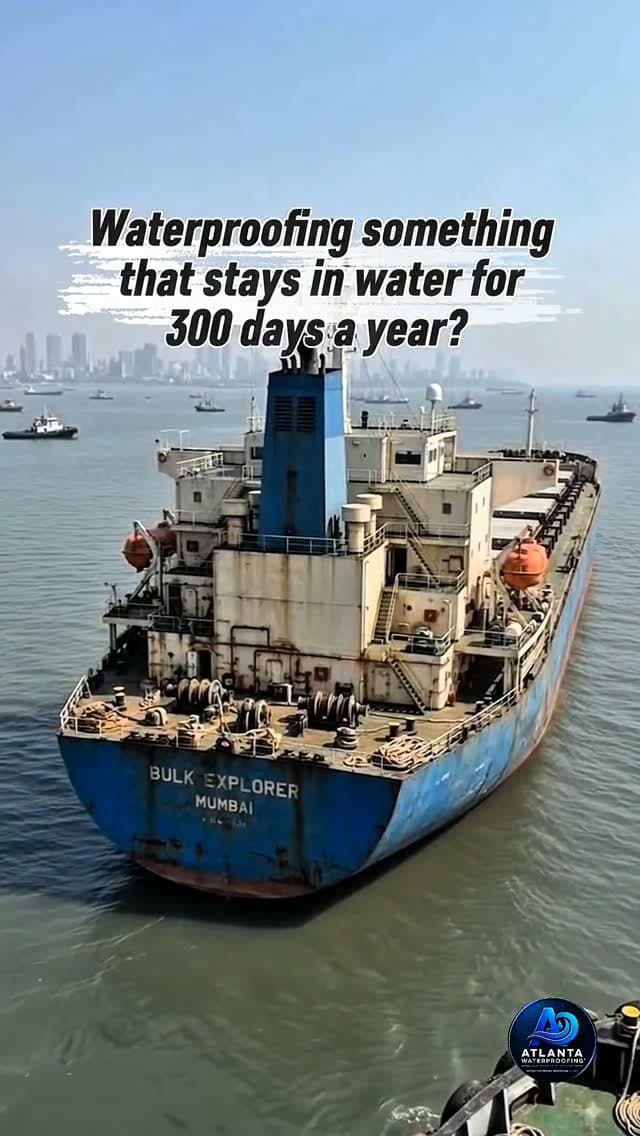
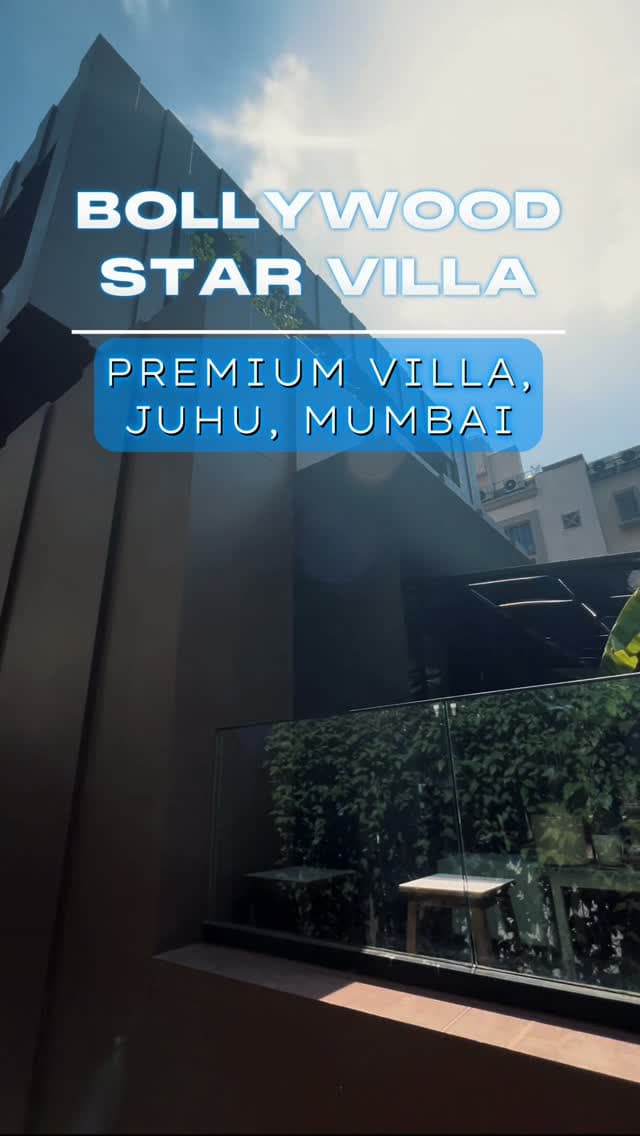
FRP Lining Waterproofing and related work, from our Instagram
@atlantawaterproof ↗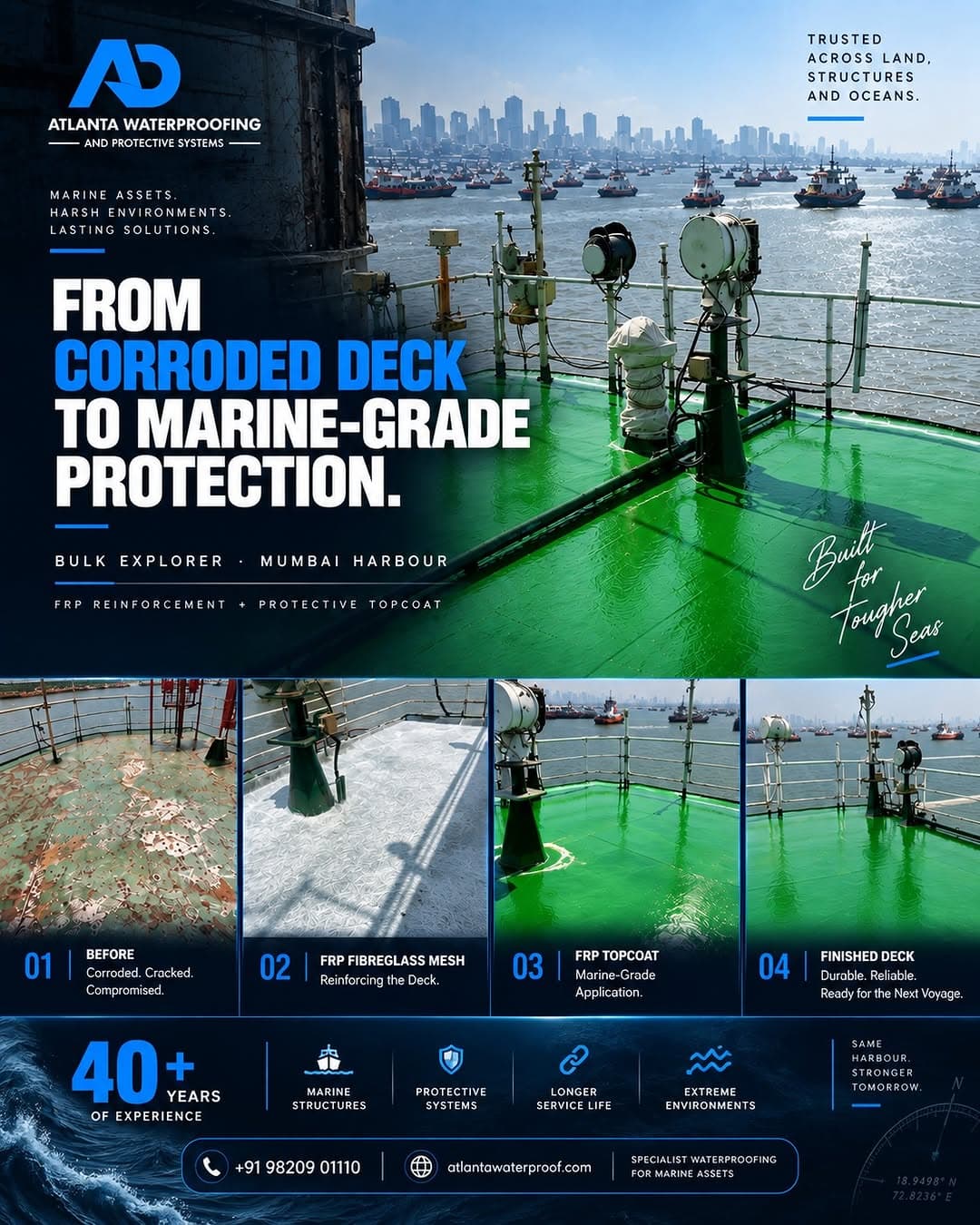
FRP Lining Waterproofing — questions we get asked
When is frp lining waterproofing the wrong choice?
Substrates that move — FRP is rigid and will crack or debond Potable water unless the specific resin system is potable-certified Selecting a system that does not match the substrate, the exposure and the movement it will see is the most expensive mistake in waterproofing, because the failure only shows up after everything above it has been built.
Why does frp lining waterproofing fail when it is done badly?
In our experience the recurring causes are: air voids left in the laminate; applied over a damp or moving substrate; resin chemistry mismatched to the stored chemical. None of these are material defects — they are execution defects, which is why the same product can last for years on one building and fail in a single monsoon on another.
How do I know the work was done properly?
Ask for evidence against these checkpoints: laminate thickness and void check; spark/holiday testing; resin compatibility documented. A contractor who cannot produce them is asking you to take execution quality on trust, on work that will be buried under a finish and impossible to inspect afterwards.
How long does frp lining waterproofing last?
Long-lived in the correct chemical exposure; substrate movement is the limiting factor. We would rather set that expectation honestly than quote a headline number, because the substrate condition and the standard of application matter more to the outcome than the product's own datasheet figure.
What does frp lining waterproofing cost in Mumbai?
Cost depends on area, substrate condition, access, and how much preparation or structural repair is needed before the system can go on. We do not publish a rate per square foot, because a number quoted without seeing the building is either meaningless or misleading. The site inspection is free and produces an itemised scope you can compare against any other quotation.
Which standards apply to frp lining waterproofing?
The relevant Indian Standards for this work are IS 3067. These cover the design, preparatory work and material requirements. Where a project specification names a different or additional standard, we work to the specification.
Book the inspection. It costs nothing and it settles the argument.
An engineer visits, finds the actual source, and tells you what the building needs and why. You get a clear scope before any money is discussed.
Mon–Fri 08:00–18:00 · Sat 09:00–16:00 · Jogeshwari West