
Which waterproofing system do you need?
Four questions — what you are treating, what it is exposed to, what goes over it, and whether the substrate moves. The tool returns the systems that fit, and then does the thing most selectors will not: it lists every system it ruled out and the specific constraint that eliminated it, so you can check the reasoning rather than trust it.
Four questions
Selection is where most failures start
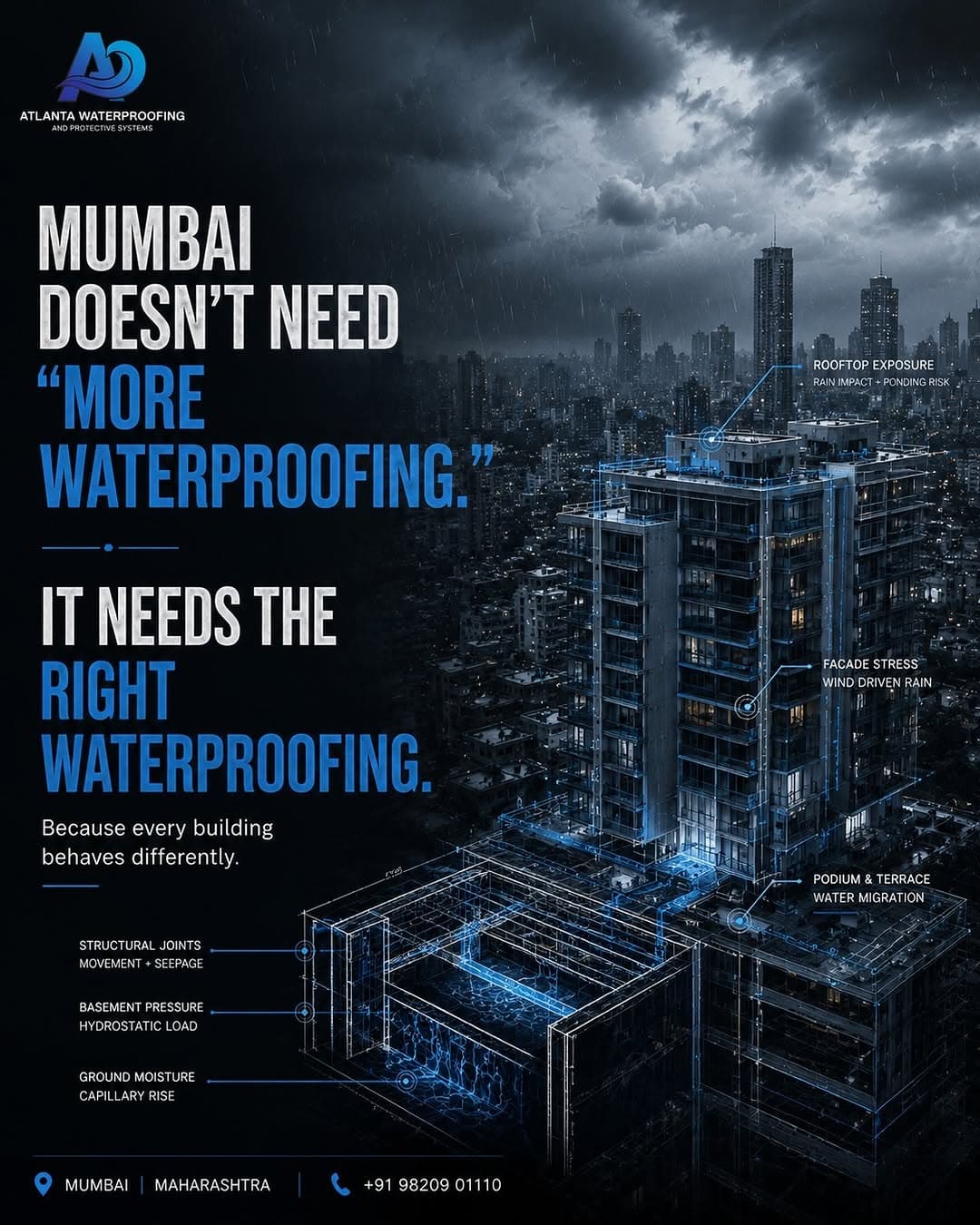
Almost every waterproofing failure we are called in to fix was the wrong system for the substrate, not a bad product. The materials on the market are broadly sound. What goes wrong is a rigid coating on a surface that moves, an exposed membrane with no protection, or a system chosen for a datasheet property the building will never use.
The corollary is worth saying plainly: the most expensive system is frequently the wrong one. Paying for polyurea’s abrasion resistance on a terrace nobody walks on, or SBS’s elasticity on a substrate that does not move, buys a property that will never be called upon. This tool will tell you that.
Or read the comparisons directly
- APP membrane vs SBS membrane
Both are modified bitumen sheets applied by torch.
- Brick bat coba vs Torch-on membrane
Coba is a thick cementitious build-up that creates the fall, insulates the slab and forms the barrier all at once.
- Polyurea vs Polyurethane coating
Polyurea is spray-applied with heated plural-component equipment and gels in seconds, giving a seamless high-build film that can be walked on within the hour.
- PU injection vs Epoxy injection
The deciding question is whether the crack is moving and whether it is wet.
- HDPE membrane vs Bentonite
Both are pre-applied below-grade systems.
- Cementitious coating vs Liquid membrane
Cementitious coatings are rigid, breathable and bond well to damp concrete — which is why they suit tanks and internal tanking.
- China mosaic vs Shahabad ladi
Both are protective finishes laid over a completed terrace waterproofing layer — neither is a barrier in itself.
- Positive side (external) vs Negative side (internal)
Positive-side waterproofing sits on the face the water arrives from, so water pressure pushes it against the structure.
- Crystalline vs Surface coating
Crystalline systems penetrate concrete and grow crystals inside its capillaries, becoming part of the concrete.
Why one system never fits every surface
@atlantawaterproof ↗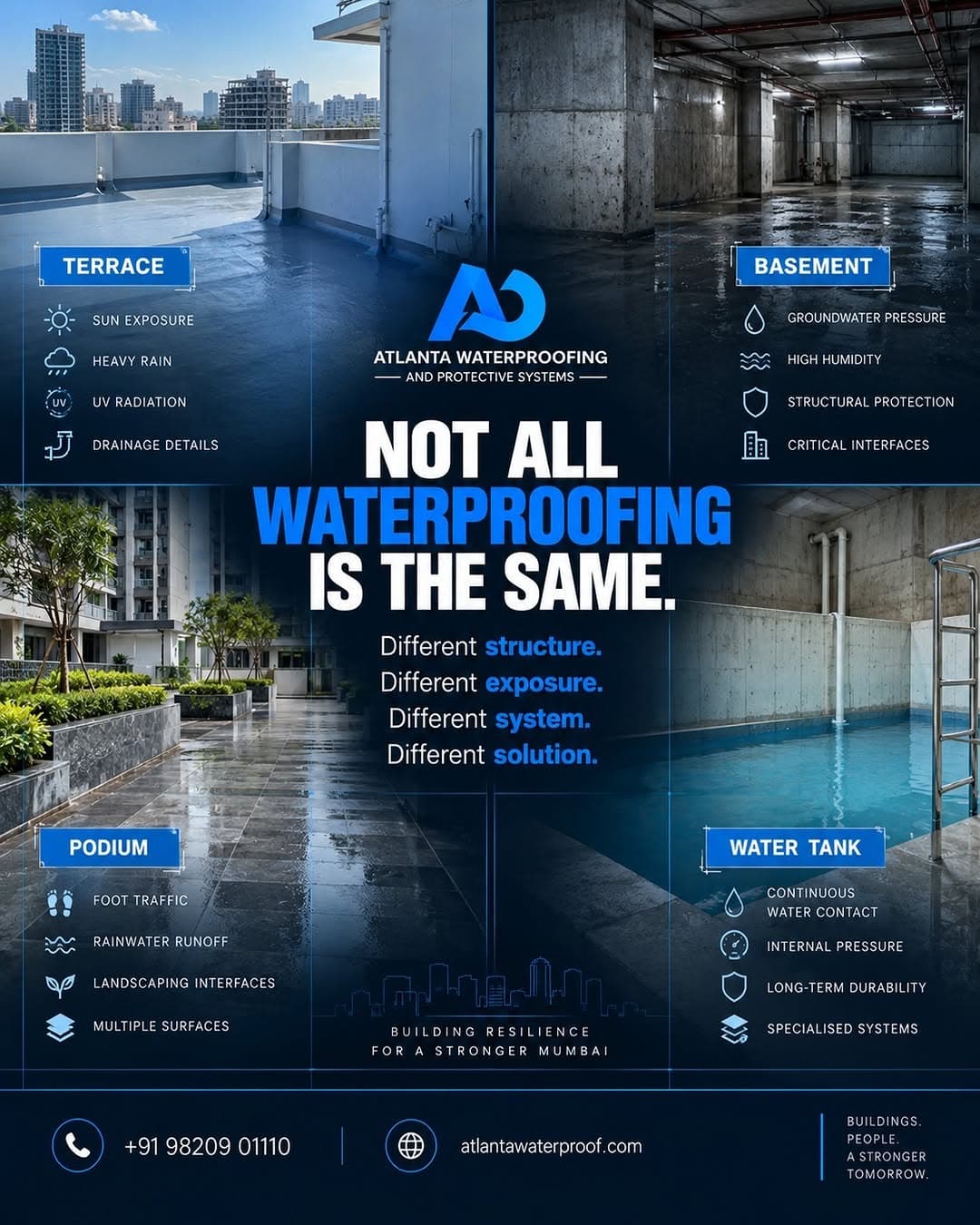
About this tool
Why does it show me what it rejected?
Because that is where the actual engineering lives. Any tool can name a winner; the useful information is which alternatives were considered and what specific constraint knocked each one out. If you disagree with a rejection — your building moves less than you indicated, say — you can see exactly which answer caused it and change it.
It recommended more than one system. Which do I choose?
Several systems genuinely do fit most situations, and the choice between them comes down to budget, programme, dead load and what the building can carry. That is a site conversation. Each recommendation links to its full specification, including the cost drivers and the failure modes to watch for.
It rejected everything. What now?
That usually means your requirements are genuinely in tension — for example a substrate that moves combined with a need for a rigid chemical-resistant lining. Those are real engineering conflicts and they need resolving on site rather than by a tool. It is an honest result, not a bug.
Does this replace a site inspection?
No, and it is not meant to. It tells you which systems are plausible for what you described. It cannot see the condition of your substrate, the state of the falls, or what is behind the plaster — and those change the answer more than any of the four questions do.
Have an engineer confirm it on site
The tool tells you what is plausible. An inspection tells you what your substrate, falls and existing condition actually allow — which is usually the deciding factor.
Mon–Fri 08:00–18:00 · Sat 09:00–16:00 · Jogeshwari West