
Industrial floor breaking up under traffic
An industrial floor fails when the surface was specified for chemical resistance but not for mechanical loading, or when the substrate beneath was never properly prepared. Forklift wheels find both faults quickly.
Stable enough to schedule properly. Best resolved before the next monsoon rather than during it.
Probable causes, ranked
Ordered by how often we find each one to be the actual source. The 'tell' is what distinguishes it from the others.
- 01most common
Coating specified without regard to wheel loading
The tell — Wear tracks along traffic routes with the coating intact elsewhere.
Polyurea Waterproofing → - 02common
Inadequate surface preparation causing debonding
The tell — Coating lifts in sheets with a clean underside.
Chemical Coating → - 03common
No movement joints in the screed
The tell — Random cracking across bays.
IPS Screeding Work → - 04less common
Chemical attack on an unsuitable coating
The tell — Softening or discolouration around spill areas.
FRP Lining Waterproofing →
Sixty seconds, before you call anyone
- Photograph it while it is actively wet. A dried stain tells a surveyor far less than a running one.
- Note whether it worsens with rain or with usage. Rain-linked points to the building envelope; usage-linked points to plumbing. This single distinction settles most arguments about responsibility.
- Check the area directly above and beside the damage, not only below it. Water travels along a slab before it drops.
- Look specifically for the tell of the most likely cause: wear tracks along traffic routes with the coating intact elsewhere.
- Do not chip into saturated plaster or paint over a damp patch. The first risks bringing material down; the second destroys the evidence needed to trace the path.
What it becomes if you leave it
A broken floor is a trip and equipment hazard, and repairs mean taking areas out of service. Because resurfacing needs a shutdown window, the disruption usually costs more than the materials.
How we have fixed this on real buildings
@atlantawaterproof ↗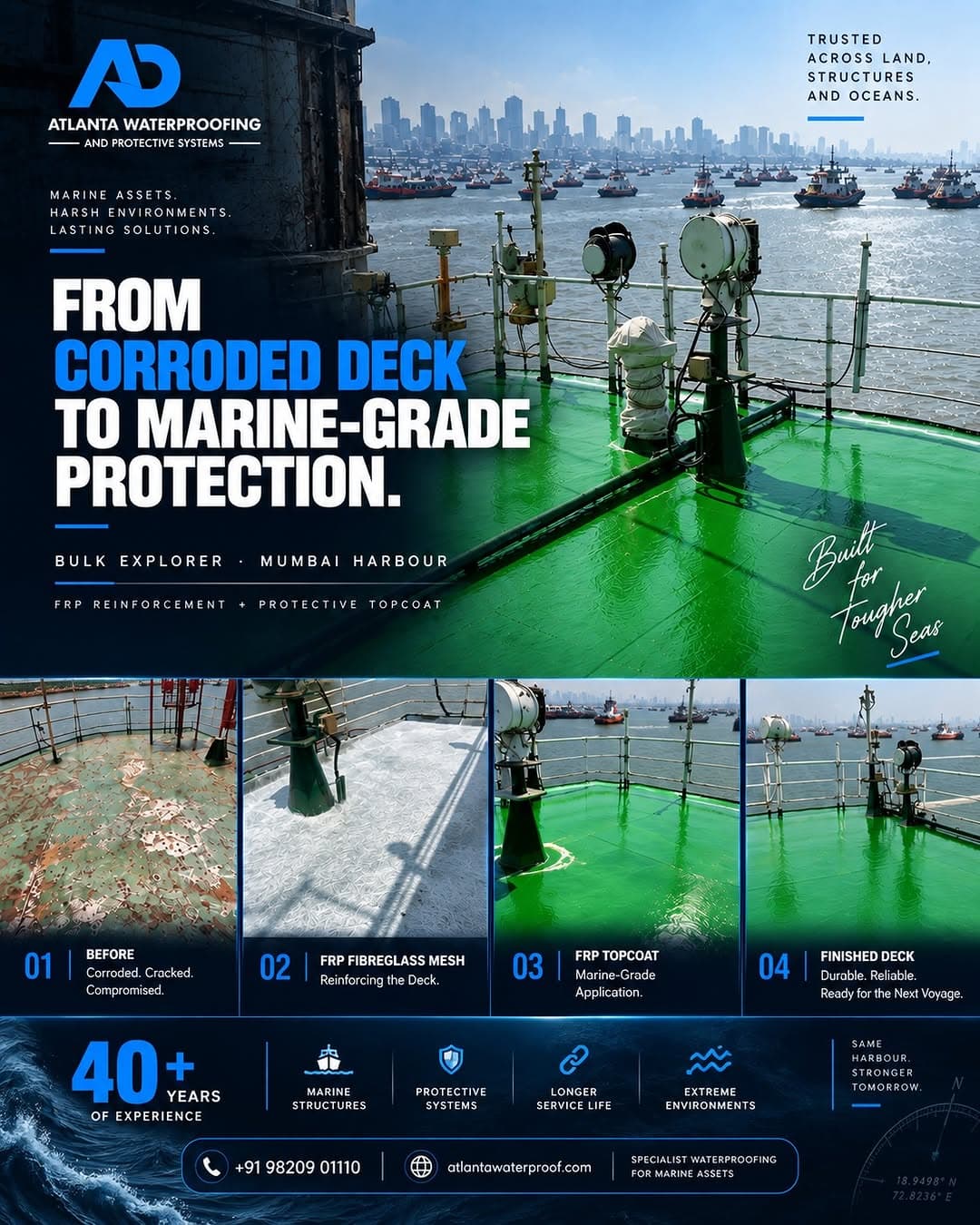

Industrial floor breaking up under traffic — questions we get asked
What is the most likely cause of industrial floor breaking up under traffic?
Coating specified without regard to wheel loading. The sign that points to it is: wear tracks along traffic routes with the coating intact elsewhere. That said, the ranking here is a starting point — the actual source is confirmed by survey, because more than one of these can be true at once.
What happens if I leave it?
A broken floor is a trip and equipment hazard, and repairs mean taking areas out of service. Because resurfacing needs a shutdown window, the disruption usually costs more than the materials.
Can I diagnose this myself before calling anyone?
Partly, and it is worth doing. Photograph it while it is actively wet, note whether it worsens with rain or with usage, and check the area directly above and beside the damage. That single rain-versus-usage distinction narrows the cause more than anything else you can do in sixty seconds.
How urgent is this?
Plan it. Stable enough to schedule properly. Best resolved before the next monsoon rather than during it.
Send us a photograph and we will tell you what we think it is
WhatsApp a photo taken while it is wet, with a note on whether it tracks with rain or with usage. That is usually enough for a first opinion, and the site inspection that follows is free.
Mon–Fri 08:00–18:00 · Sat 09:00–16:00 · Jogeshwari West