
Cracked or falling chajja and projection
A chajja is a thin cantilever with minimal concrete cover, so its reinforcement corrodes earlier than anywhere else on a building. Cracked or drooping chajjas are both a falling-material hazard and an early warning about the structure generally.
This can compound quickly or carries a safety risk. Do not wait for the monsoon to end.
Probable causes, ranked
Ordered by how often we find each one to be the actual source. The 'tell' is what distinguishes it from the others.
- 01most common
Reinforcement corrosion in a thin section with little cover
The tell — Rust staining along the underside and cracking parallel to the edge.
Column & Beam RCC Work → - 02common
Water standing on the chajja with no fall or drip mould
The tell — Staining runs back along the soffit toward the wall.
External Plaster & Painting → - 03common
Overloading from added cladding, planters or equipment
The tell — Visible deflection at the free edge.
Carbon Wrapping (RCC Strengthening) → - 04less common
Original construction with inadequate cover
The tell — Multiple chajjas failing at similar ages across the building.
Building Restoration →
Sixty seconds, before you call anyone
- Photograph it while it is actively wet. A dried stain tells a surveyor far less than a running one.
- Note whether it worsens with rain or with usage. Rain-linked points to the building envelope; usage-linked points to plumbing. This single distinction settles most arguments about responsibility.
- Check the area directly above and beside the damage, not only below it. Water travels along a slab before it drops.
- Look specifically for the tell of the most likely cause: rust staining along the underside and cracking parallel to the edge.
- Do not chip into saturated plaster or paint over a damp patch. The first risks bringing material down; the second destroys the evidence needed to trace the path.
What it becomes if you leave it
A falling chajja is a serious safety risk to anyone below. Because they fail first, they are also the most reliable early indicator that the rest of the building's reinforcement is approaching the same condition.
This one carries a safety or rapid-escalation risk.
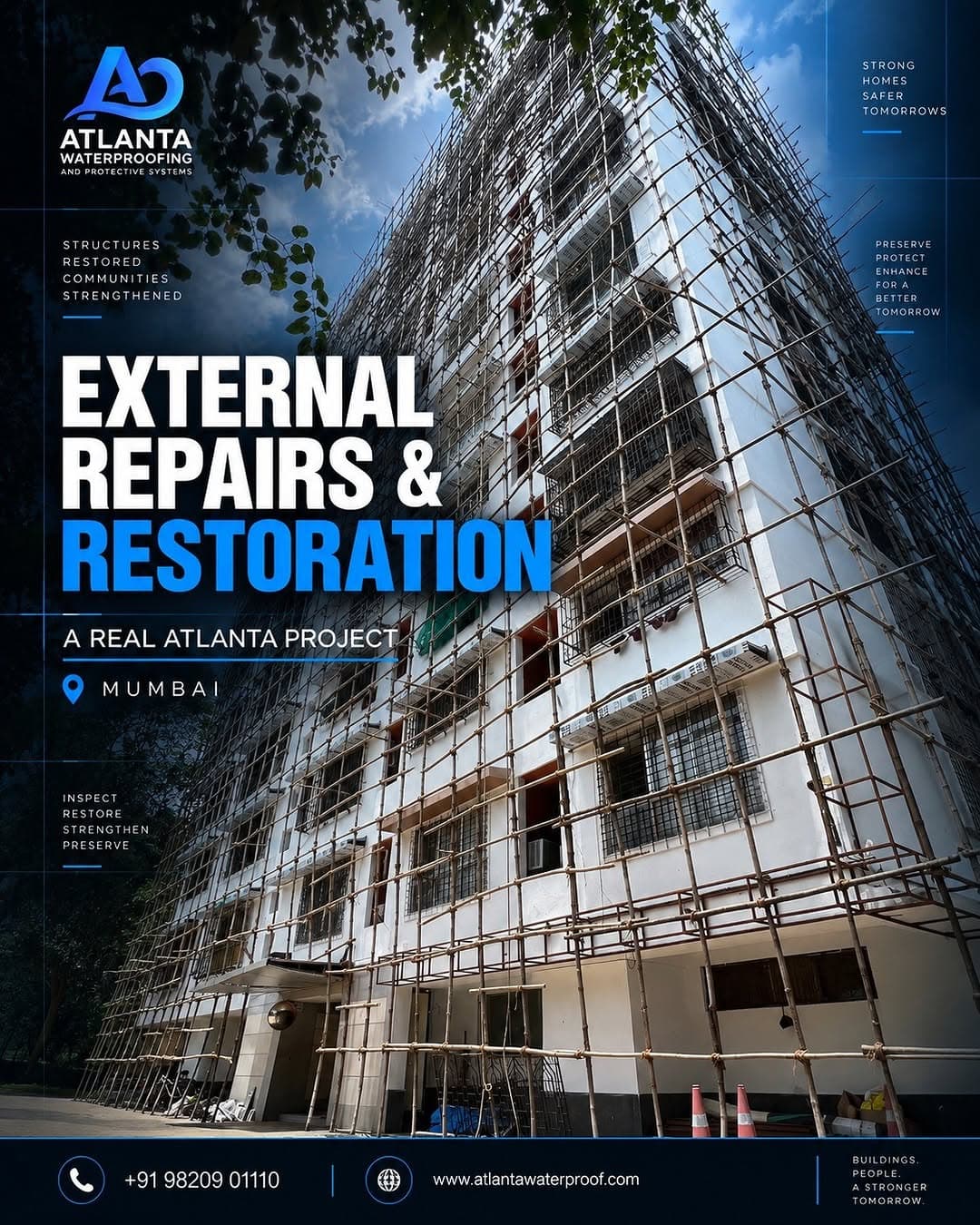
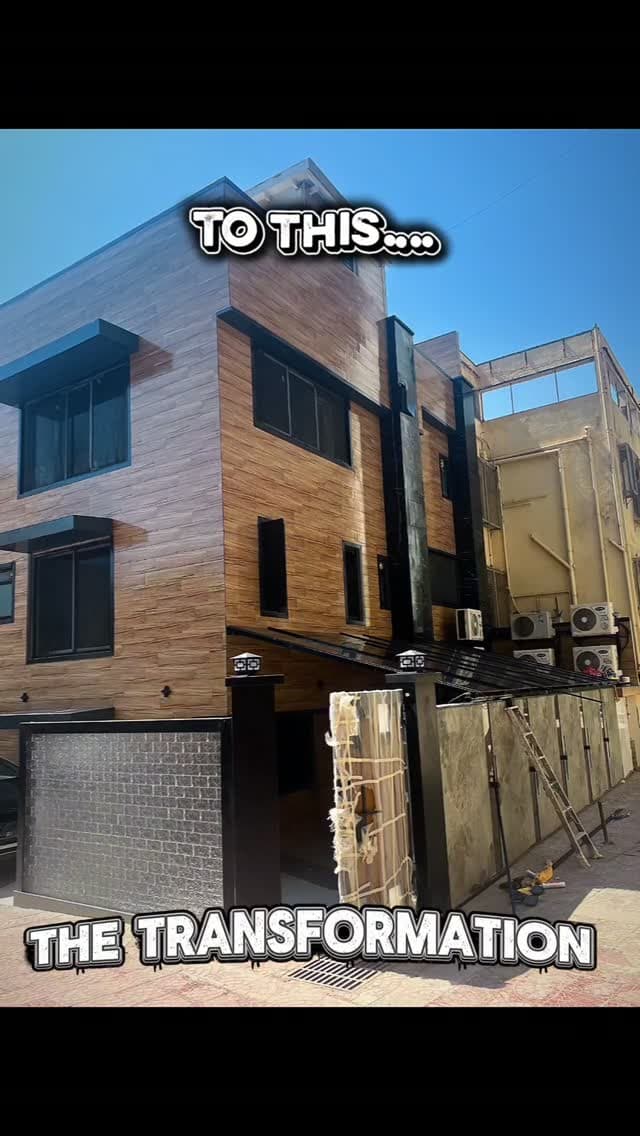
How we have fixed this on real buildings
@atlantawaterproof ↗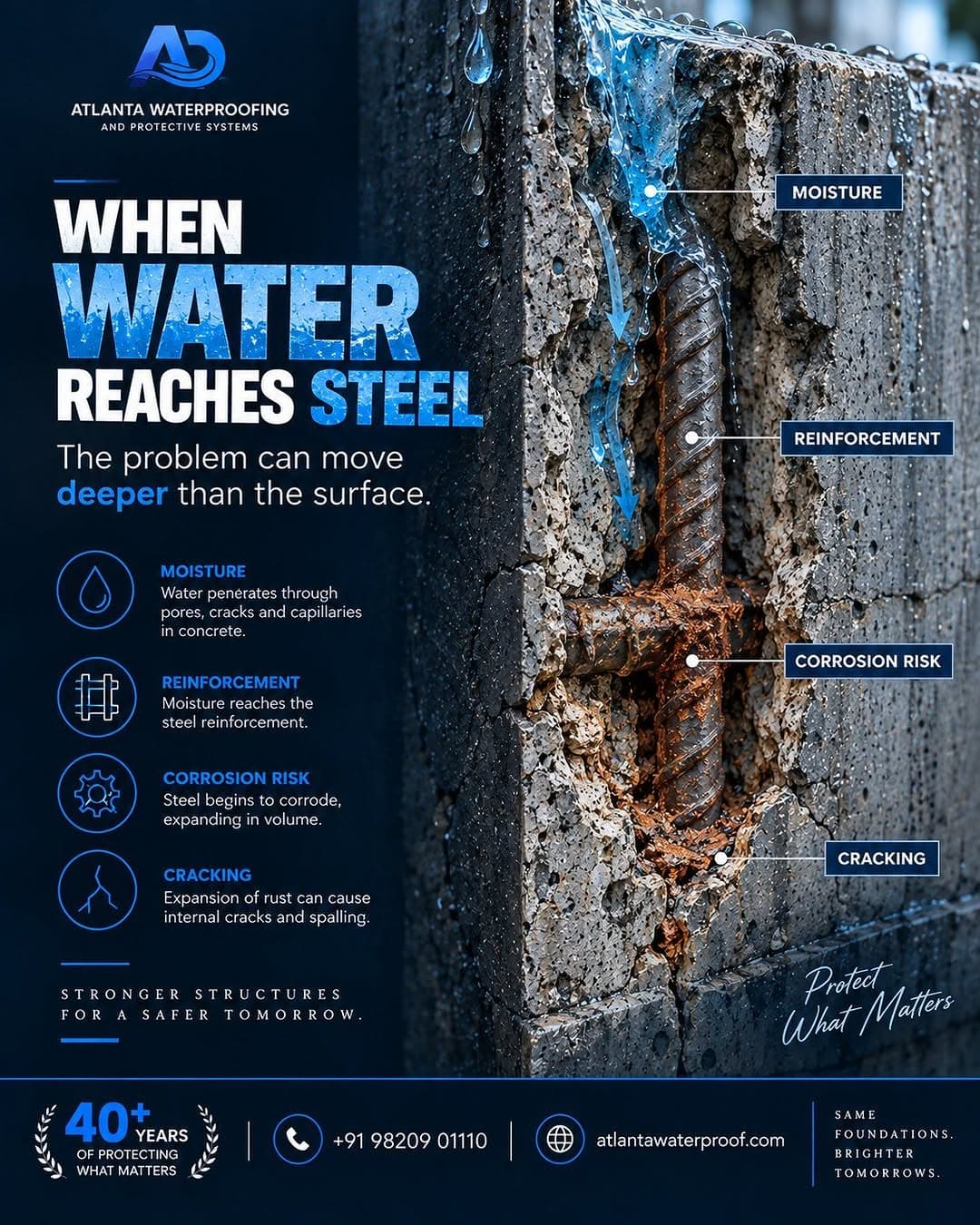
Often seen alongside this
- Plaster falling off an external wall
Plaster falling from a facade is a safety issue before it is a building one — falling material from height injures people.
- Rusting reinforcement visible in a beam or column
Visible reinforcement means the concrete cover that protected it has already gone.
- Concrete flaking or falling from a ceiling or soffit
Spalling is concrete being pushed off from behind by expanding corrosion products on the reinforcement.
Cracked or falling chajja and projection — questions we get asked
What is the most likely cause of cracked or falling chajja and projection?
Reinforcement corrosion in a thin section with little cover. The sign that points to it is: rust staining along the underside and cracking parallel to the edge. That said, the ranking here is a starting point — the actual source is confirmed by survey, because more than one of these can be true at once.
What happens if I leave it?
A falling chajja is a serious safety risk to anyone below. Because they fail first, they are also the most reliable early indicator that the rest of the building's reinforcement is approaching the same condition.
Can I diagnose this myself before calling anyone?
Partly, and it is worth doing. Photograph it while it is actively wet, note whether it worsens with rain or with usage, and check the area directly above and beside the damage. That single rain-versus-usage distinction narrows the cause more than anything else you can do in sixty seconds.
How urgent is this?
Urgent. This can compound quickly or carries a safety risk. Do not wait for the monsoon to end.
Send us a photograph and we will tell you what we think it is
WhatsApp a photo taken while it is wet, with a note on whether it tracks with rain or with usage. That is usually enough for a first opinion, and the site inspection that follows is free.
Mon–Fri 08:00–18:00 · Sat 09:00–16:00 · Jogeshwari West