
Plaster falling off an external wall
Plaster falling from a facade is a safety issue before it is a building one — falling material from height injures people. It means the render has debonded from the masonry, usually because water has been sitting behind it for a long time.
This can compound quickly or carries a safety risk. Do not wait for the monsoon to end.
Probable causes, ranked
Ordered by how often we find each one to be the actual source. The 'tell' is what distinguishes it from the others.
- 01most common
Plaster debonded through prolonged water saturation
The tell — Large areas sound hollow, and fallen pieces have a clean back face.
External Plaster Work → - 02common
Applied to a dry, unkeyed substrate and never properly bonded
The tell — Whole panels come away cleanly with no masonry attached.
External Plaster Work → - 03common
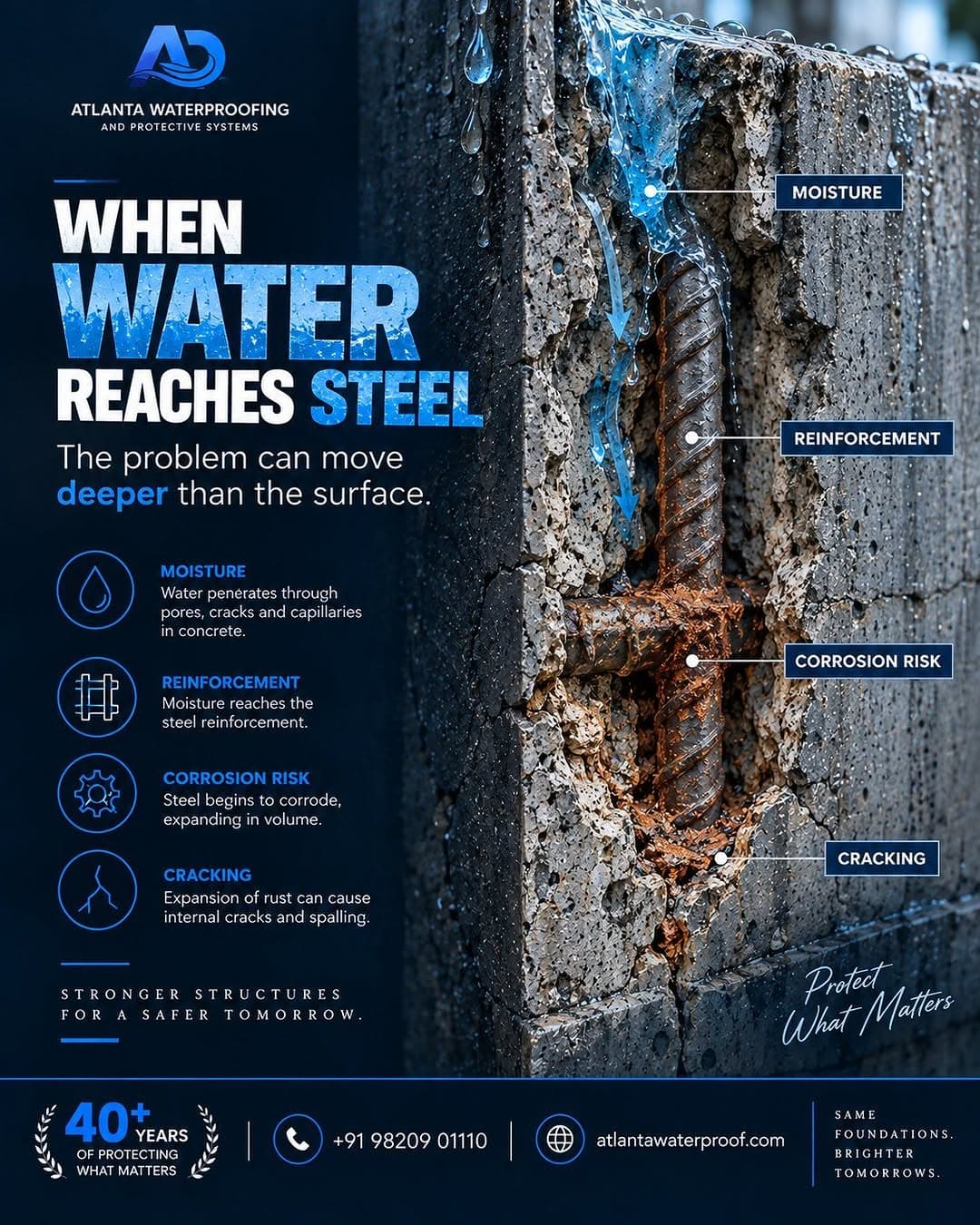
Corroding reinforcement pushing the cover off
The tell — Rust staining and exposed steel behind the fallen area.
Building Restoration → - 04less common
Salt crystallisation breaking the plaster from within
The tell — Crystalline deposits on the failed surfaces.
Silane-Siloxane Water Repellent Treatment →
Sixty seconds, before you call anyone
- Photograph it while it is actively wet. A dried stain tells a surveyor far less than a running one.
- Note whether it worsens with rain or with usage. Rain-linked points to the building envelope; usage-linked points to plumbing. This single distinction settles most arguments about responsibility.
- Check the area directly above and beside the damage, not only below it. Water travels along a slab before it drops.
- Look specifically for the tell of the most likely cause: large areas sound hollow, and fallen pieces have a clean back face.
- Do not chip into saturated plaster or paint over a damp patch. The first risks bringing material down; the second destroys the evidence needed to trace the path.
What it becomes if you leave it
This is the failure most likely to injure somebody. Beyond that, an exposed masonry face takes water directly, so the deterioration accelerates once the plaster is gone.
This one carries a safety or rapid-escalation risk.
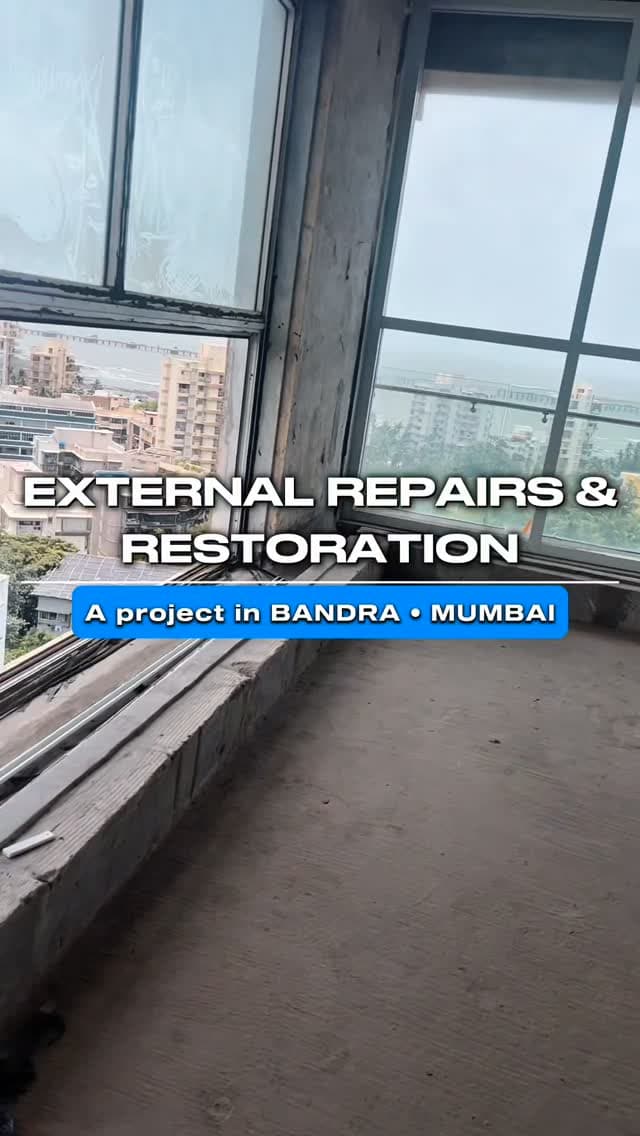
How we have fixed this on real buildings
@atlantawaterproof ↗
Often seen alongside this
- Water seeping through an external wall during rain
Water passing through an external wall means the render is no longer shedding it.
- White powder or crystals forming on walls
The white deposit is efflorescence — salts carried out of the masonry by moving water and left behind as it evaporates.
- Concrete flaking or falling from a ceiling or soffit
Spalling is concrete being pushed off from behind by expanding corrosion products on the reinforcement.
Plaster falling off an external wall — questions we get asked
What is the most likely cause of plaster falling off an external wall?
Plaster debonded through prolonged water saturation. The sign that points to it is: large areas sound hollow, and fallen pieces have a clean back face. That said, the ranking here is a starting point — the actual source is confirmed by survey, because more than one of these can be true at once.
What happens if I leave it?
This is the failure most likely to injure somebody. Beyond that, an exposed masonry face takes water directly, so the deterioration accelerates once the plaster is gone.
Can I diagnose this myself before calling anyone?
Partly, and it is worth doing. Photograph it while it is actively wet, note whether it worsens with rain or with usage, and check the area directly above and beside the damage. That single rain-versus-usage distinction narrows the cause more than anything else you can do in sixty seconds.
How urgent is this?
Urgent. This can compound quickly or carries a safety risk. Do not wait for the monsoon to end.
Send us a photograph and we will tell you what we think it is
WhatsApp a photo taken while it is wet, with a note on whether it tracks with rain or with usage. That is usually enough for a first opinion, and the site inspection that follows is free.
Mon–Fri 08:00–18:00 · Sat 09:00–16:00 · Jogeshwari West