
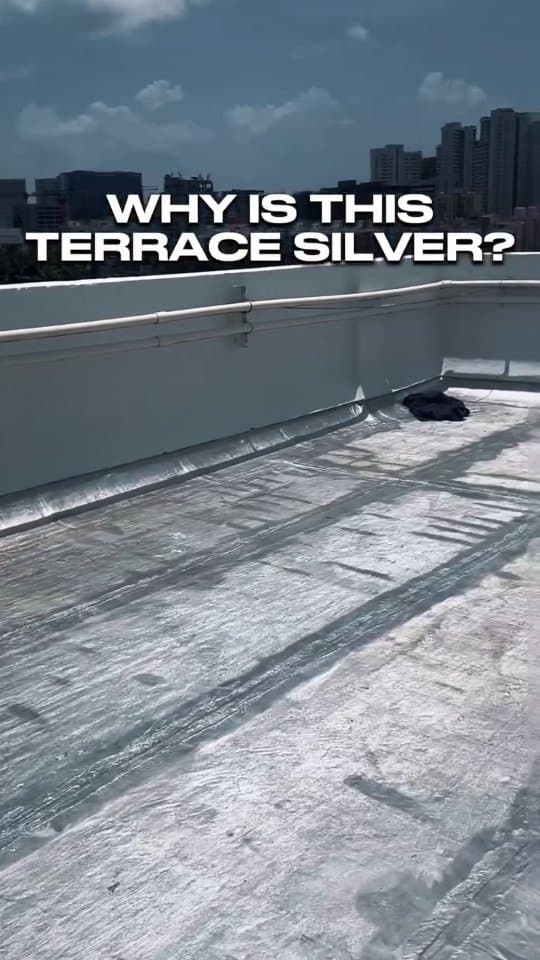
Water standing on the terrace after rain
Water still standing on a terrace 24 hours after rain means the surface has no effective fall to the outlets. No waterproofing system on the market is designed for permanent immersion, so ponding will find the weakest point and eventually get through it.
Not an emergency, but it will get worse and more expensive with every monsoon it survives.
Probable causes, ranked
Ordered by how often we find each one to be the actual source. The 'tell' is what distinguishes it from the others.
- 01most common
The terrace was never laid to a fall
The tell — Standing water is in the middle of a bay rather than near a blocked drain.
Terrace Waterproofing → - 02common
Rainwater outlets set higher than the surrounding surface
The tell — A shallow film of water remains right up to the drain itself.
Terrace Waterproofing → - 03common
Blocked outlets and downpipes
The tell — Water drains slowly once debris is cleared by hand.
Terrace Waterproofing → - 04less common
Falls lost when a screed or tile finish was laid
The tell — Ponding began after the last repair rather than before it.
IPS Screeding Work →
Sixty seconds, before you call anyone
- Photograph it while it is actively wet. A dried stain tells a surveyor far less than a running one.
- Note whether it worsens with rain or with usage. Rain-linked points to the building envelope; usage-linked points to plumbing. This single distinction settles most arguments about responsibility.
- Check the area directly above and beside the damage, not only below it. Water travels along a slab before it drops.
- Look specifically for the tell of the most likely cause: standing water is in the middle of a bay rather than near a blocked drain.
- Do not chip into saturated plaster or paint over a damp patch. The first risks bringing material down; the second destroys the evidence needed to trace the path.
What it becomes if you leave it
Ponding is the single most reliable predictor of terrace failure. Standing water finds the weakest 2% of the surface and works on it continuously, so a system that would have lasted for years fails in a fraction of that time.
How we have fixed this on real buildings
@atlantawaterproof ↗
Often seen alongside this
- Water leaking from the ceiling in a top-floor flat
Water coming through a top-floor ceiling almost always originates on the terrace above — a lost fall, a failed waterproofing layer, or an untreated crack in the slab.
- Terrace coba sounding hollow when tapped
A hollow note when a terrace is tapped means the coba has debonded from the slab beneath it.
- Visible crack in an RCC slab or beam
A crack in structural concrete is either dormant or live, and the difference decides everything.
Water standing on the terrace after rain — questions we get asked
What is the most likely cause of water standing on the terrace after rain?
The terrace was never laid to a fall. The sign that points to it is: standing water is in the middle of a bay rather than near a blocked drain. That said, the ranking here is a starting point — the actual source is confirmed by survey, because more than one of these can be true at once.
What happens if I leave it?
Ponding is the single most reliable predictor of terrace failure. Standing water finds the weakest 2% of the surface and works on it continuously, so a system that would have lasted for years fails in a fraction of that time.
Can I diagnose this myself before calling anyone?
Partly, and it is worth doing. Photograph it while it is actively wet, note whether it worsens with rain or with usage, and check the area directly above and beside the damage. That single rain-versus-usage distinction narrows the cause more than anything else you can do in sixty seconds.
How urgent is this?
Act this season. Not an emergency, but it will get worse and more expensive with every monsoon it survives.
Send us a photograph and we will tell you what we think it is
WhatsApp a photo taken while it is wet, with a note on whether it tracks with rain or with usage. That is usually enough for a first opinion, and the site inspection that follows is free.
Mon–Fri 08:00–18:00 · Sat 09:00–16:00 · Jogeshwari West