
Toilet Waterproofing in Bandra West
Toilet Waterproofing in Bandra West means treating the specific way buildings fail in H/West Ward: sea-face chloride and salt-laden wind and sloping tile roof failure on old bungalows. With around 2,500 mm of annual rainfall and sea-facing high-rise dominating here, the specification follows the exposure rather than a standard template. We are about 25 minutes away.
Why buildings in Bandra West need this
Wet-area leaks in Bandra West are a year-round problem rather than a monsoon one, because the water source is domestic use, not weather. In sea-facing high-rise with a 15-100 years age profile, the sunk slabs and pipe penetrations are usually the original ones, and their seals have long since gone.
The failure patterns we see repeatedly in Bandra West are sea-face chloride and salt-laden wind, sloping tile roof failure on old bungalows, terrace leakage in ageing societies. Any specification for this locality has to answer those specifically, not generically.
For toilet waterproofing specifically, the defects that cause callbacks are soil pipe penetration unsealed; inadequate upturn; substrate not primed. In Bandra West's conditions those are not cosmetic shortcuts — chloride reaches the reinforcement through exactly those gaps.
The stock itself is not uniform here. Bandra West runs to sea-facing high-rise, Bandra bungalows and villas, 1960s-80s societies, heritage Portuguese-era cottages, spanning roughly 15-100 years. A specification that suits one of those does not automatically suit the next, which is why the survey looks at the actual building rather than the postcode.
Unusually mixed: sea-facing towers, ageing societies, and heritage cottages with pitched tile roofs all within a few streets. The pitched-roof stock needs a completely different approach from the flat-slab majority of Mumbai. We work throughout the area, including around Bandra-Worli Sea Link, Bandstand, Carter Road, Mount Mary.
Toilet Waterproofing, specified for Bandra West
The system is chosen for how well it details around penetrations rather than for its headline properties. Almost every wet-area leak we open up in Bandra West is an unsealed pipe penetration or an upturn that stopped below the splash line — not a membrane that failed across its field.
Toilet waterproofing seals the sunken slab, wall skirting and pipe penetrations of a WC area so water cannot migrate into the structure or the flat below. It is the same discipline as bathroom waterproofing, with particular attention to the soil pipe and floor trap penetrations, which are the most common leak paths.
When this is the right choice here
- Ceiling damp directly beneath a toilet
- Toilet renovation with the sunk opened
- New wet-area construction
When it is not
- Leak traced to the soil stack or a concealed cistern connection — plumbing first
Full toilet waterproofing specification, method and materials →
Sixty seconds, before you call anyone
- Check the ceiling of the space directly below the wet area, and run the shower for ten minutes to see whether the patch darkens. Usage-linked staining points to the wet area; rain-linked points elsewhere.
- Look specifically for evidence of soil pipe penetration unsealed — it is the most common cause of failure in this system.
- Then check for inadequate upturn, which is the next most frequent.
- Separately, look for sea-face chloride and salt-laden wind, which is the pattern this part of Bandra West produces regardless of which system was used.
- Photograph it while it is wet, and note whether it worsens with rain or with usage. Rain-linked points to the building envelope; usage-linked points to plumbing. That single distinction settles most arguments about who is responsible.
- Do not chip into a saturated ceiling or paint over a damp patch. The first risks bringing plaster down on someone; the second destroys the evidence needed to trace the path.
How toilet waterproofing is carried out in Bandra West
The sequence below is the same wherever the work is done. In Bandra West the stage that most often decides the outcome is the preparation, because sea-face chloride and salt-laden wind leaves substrates that look sound and are not.
Identical discipline to a bathroom, with additional attention to the soil pipe. The sunk is cleared to the structural slab, laitance removed, cracks cut and filled, and fillets formed at every wall-to-floor junction. The annular space around the soil pipe and the floor trap is cleaned out entirely and re-grouted with non-shrink grout before coating.
- 01
Check the stack first
Where a leak repeats in the same vertical line across floors, the soil stack or a shared penetration is the source, not the individual WC. Treating each toilet in turn will not resolve a riser fault.
- 02
Open and prepare the sunk
Existing fill removed, slab cleaned, cracks treated, junction fillets formed.
- 03
Seal the soil pipe and trap
The two penetrations that leak most often are collared individually and bonded to both the pipe and the slab.
- 04
Two cross coats
Cementitious or polyurethane coating applied in two cross-directional coats to a combined 1.5–2.0 mm.
- 05
Upturn to 300 mm
Carried up all enclosing walls a minimum of 300 mm above finished floor level.
- 06
Pond test and photograph
24–48 hour pond test with the ceiling below observed, and a photographic record of every penetration before filling.
What we check on site
- Pond test before filling
- Penetration photography
Curing
3–7 days cure before pond testing, and full cure before tiling. Returning a WC to service before the barrier has cured is a common cause of early failure in occupied buildings where the room is needed back quickly.
Materials
- Coating
- Two-component polymer-modified cementitious slurry or polyurethane liquid membrane.
- Collars
- Proprietary collars at the soil pipe and floor trap, bonded to pipe and slab.
- Reinforcement
- Alkali-resistant fabric at junctions and around penetrations.
Our nearest documented project, and how far we are
Bandra–Worli Sea Link
Associated with the waterproofing works on the Bandra–Worli Sea Link, one of India's most prestigious infrastructure landmarks.
Read the project record →~25 min
Our office is in Jogeshwari West, about 9 km from Bandra West — normally around 25 minutes outside peak traffic.
Travel time is a typical off-peak estimate for Bandra West, not a guaranteed response time. Mumbai traffic being what it is, we confirm an arrival window when you call.
What toilet waterproofing costs in Bandra West
Rate per square foot: To be confirmed
We have deliberately not published a rate here. Cost on a Bandra West building depends on the area, the condition of the existing structure, access and scaffolding, and how much preparation or structural repair is needed before the system can go on — and those vary far more between two buildings on the same street than they do between localities. The site inspection is free and produces an itemised scope you can compare line by line against any other quotation.
Toilet Waterproofing in Bandra West — questions we get asked
How quickly can you reach Bandra West?
Our office is in Jogeshwari West, about 9 km from Bandra West, and we normally allow around 25 minutes in off-peak traffic. We also work regularly in Khar, Bandra East, Santacruz, so a crew is often already in this part of the city.
Why do buildings in Bandra West leak more than elsewhere?
Bandra West records roughly 2,500 mm of rain a year, measured at the IMD Santacruz observatory, suburbs. Combined with sea-facing high-rise and Bandra bungalows and villas in the 15-100 years range, the recurring problems here are sea-face chloride and salt-laden wind and sloping tile roof failure on old bungalows. It is less that Bandra West leaks more, and more that it leaks in a particular and fairly predictable way.
Which BMC ward is Bandra West in, and does that matter?
Bandra West falls under H/West Ward (H/West), covering pincodes 400050. It matters practically rather than technically: ward boundaries govern which office handles permissions, notices and any municipal correspondence a society may need during major repair work.
Does being close to the sea change what Bandra West needs?
Substantially. Chloride from coastal air penetrates render and cover concrete and drives reinforcement corrosion far faster than inland. Two things follow: repair specifications must remove chloride-contaminated concrete rather than patch over it, and protective coatings should resist water ingress while still allowing the wall to dry outward. Sealing a salt-laden wall with an impermeable coating traps the problem inside.
What does toilet waterproofing usually involve in Bandra West?
The system is chosen for how well it details around penetrations rather than for its headline properties. Almost every wet-area leak we open up in Bandra West is an unsealed pipe penetration or an upturn that stopped below the splash line — not a membrane that failed across its field. The scope is confirmed after a site inspection, because the condition of the existing structure changes both the method and the cost more than the locality does.
Have you worked near Bandra West?
Our nearest documented project is Bandra–Worli Sea Link, roughly 5 km from Bandra West. Associated with the waterproofing works on the Bandra–Worli Sea Link, one of India's most prestigious infrastructure landmarks. We have also worked across Khar, Bandra East, Santacruz and the surrounding Western Suburbs.
We also work across Western Suburbs
- Toilet Waterproofing in Khar
1.2 km from Bandra West · H/West Ward
- Toilet Waterproofing in Bandra East
2.2 km from Bandra West · H/East Ward
- Toilet Waterproofing in Santacruz
2.7 km from Bandra West · H/West and H/East Wards
- Toilet Waterproofing in Sion
3.9 km from Bandra West · F/North Ward
- Toilet Waterproofing in Vile Parle
4.6 km from Bandra West · K/West and K/East Wards
- Toilet Waterproofing in Prabhadevi
4.7 km from Bandra West · G/South Ward
Other work we do in Bandra West
- Bathroom Waterproofing in Bandra West
Bathroom waterproofing seals the sunk slab and wet-area walls so water from daily use cannot reach the flat below.
- Terrace Waterproofing in Bandra West
Terrace waterproofing is the application of a continuous water barrier across a roof slab, laid to a fall so rainwater drains rather than ponds.
- Basement Waterproofing in Bandra West
Basement waterproofing protects a below-grade structure against groundwater under hydrostatic pressure.
- Brick Bat Coba Waterproofing in Bandra West
Brick bat coba is the traditional Indian terrace system: broken brick pieces bedded in waterproofed cement mortar, laid to a fall and finished with china mosaic or IPS.
Our recent work in Bandra West, on Instagram
@atlantawaterproof ↗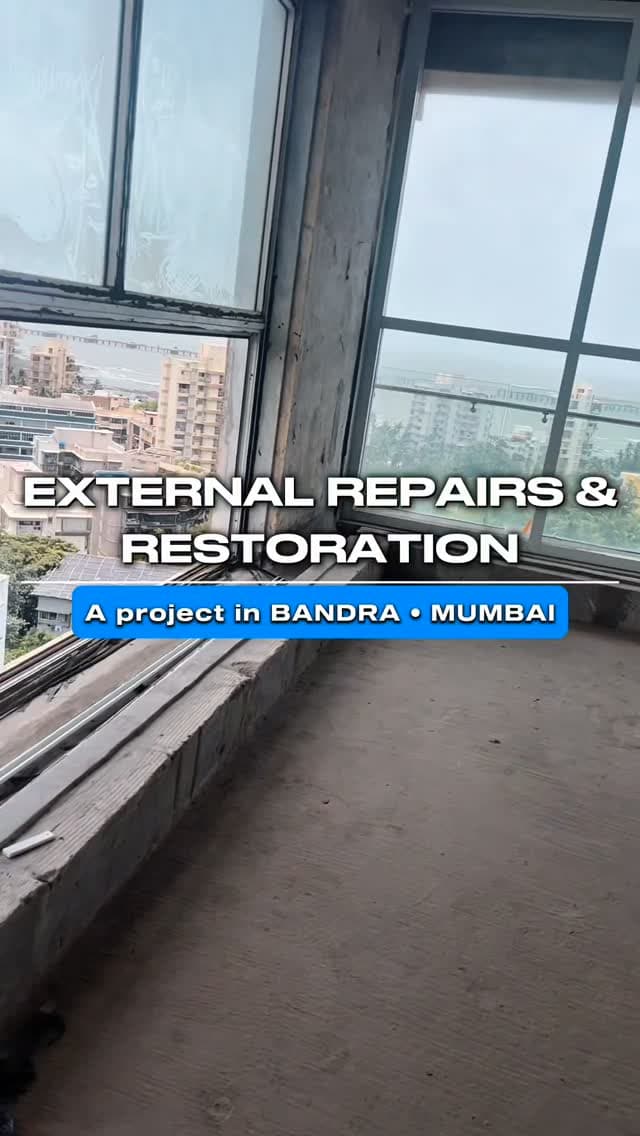 Reel
ReelExternal repairs at height, Bandra
Book a free inspection in Bandra West
An engineer visits, traces the actual source, and gives you a written scope. Our office is in Jogeshwari West, about 9 km from Bandra West — normally around 25 minutes outside peak traffic.
Mon–Fri 08:00–18:00 · Sat 09:00–16:00 · Jogeshwari West